
Hotel shift handovers: the complete guide
What belongs in a handover, how the process works in five steps, and how to tell it is actually working — from seven years of GM practice.
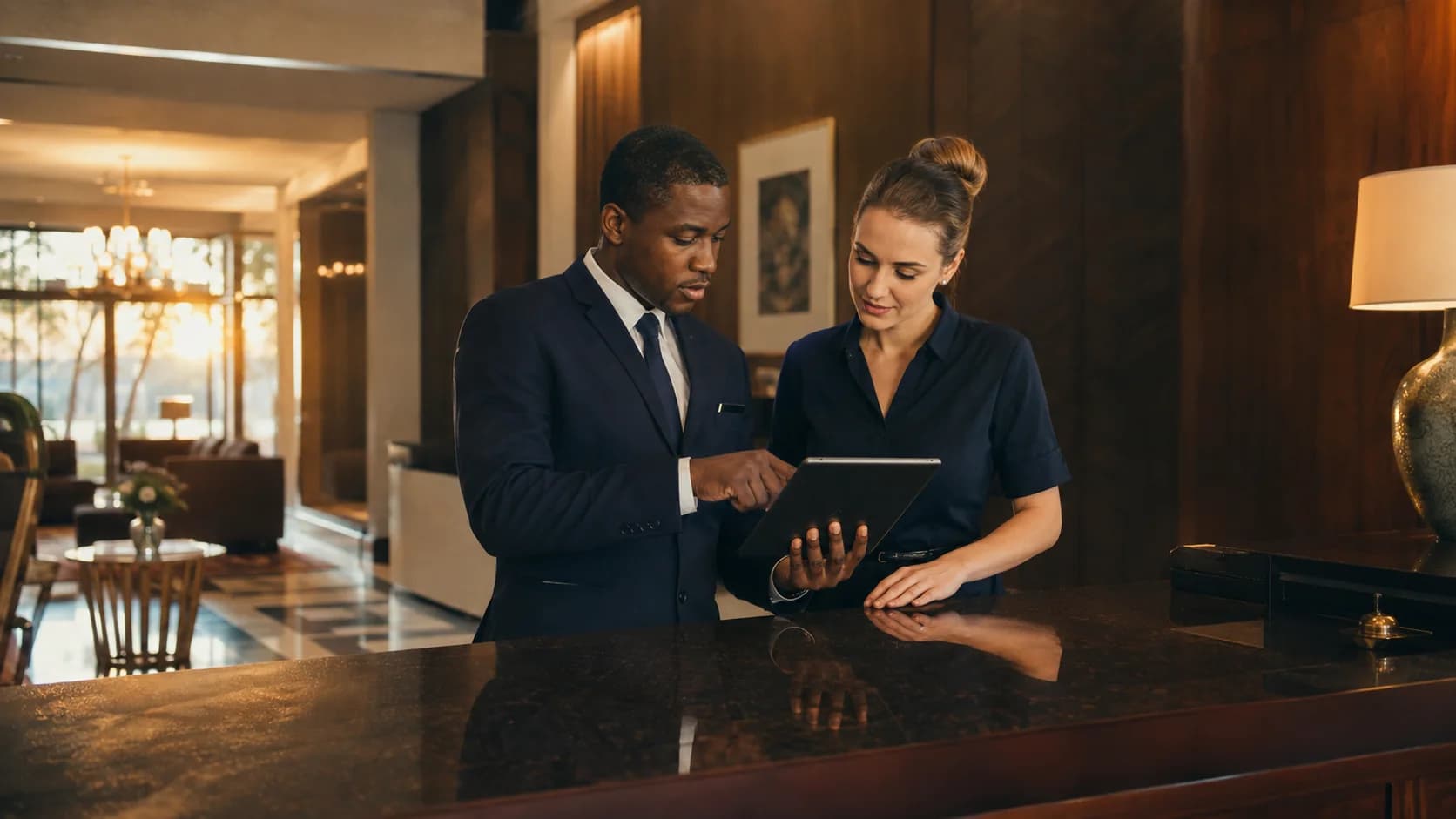
What is a shift handover in a hotel?
The shift handover is the moment one shift passes its knowledge to the next: open tasks, special guests, incidents, the state of the house. It is the only process that happens several times a day in every hotel — and in most properties the least structured one.
A good handover answers three questions for the incoming shift: What happened? What is open? What is coming at us today?
Why does the handover decide the whole day?
Every piece of information lost between two shifts comes back as a disruption: a follow-up call, duplicated work, or a complaint at the front desk. A hotel with 20 employees and two shifts a day easily loses over 80 working hours a month to unstructured handovers — time that is missing from service.
Then there is the silent damage: knowledge passed on only verbally leaves the house with every resignation. The VIP preference, the quirk of room 12, the supplier who only comes on Tuesdays — none of it is written down anywhere.
What belongs in a shift handover?
- Open tasks with status: what has been started, what is waiting on whom?
- Guest topics: arrivals, VIPs, special requests, ongoing complaints
- Maintenance and conditions: faults, outages, contractors in the house
- Specifics of the day: groups, events, staffing gaps
- Urgent items clearly separated from routine — with visible priority
The handover process in 5 steps
- 1
Capture during the shift, do not recall at the end
The best handovers happen along the way: a fault is reported when it is noticed — not reconstructed from memory eight hours later.
- 2
Record it with structure
Every item needs three things: what is going on, who it concerns, how urgent it is. Typed or spoken does not matter — consistent and findable does.
- 3
Route it to the right people
Housekeeping needs different information than maintenance. A handover that blasts everything at everyone gets skimmed. Role-based routing is the difference between informed and annoyed.
- 4
Confirm reading, keep status current
Handed over means received. The incoming shift marks what gets done — so the question of whether anyone is on it never comes up.
- 5
Keep the history
Last week's handover can be today's answer. Being able to search instead of having to ask saves time every day — and new hires onboard themselves.
Paper, WhatsApp, or digital — what actually works?
The paper logbook works as long as the same people show up every day — but it is neither searchable nor readable from afar. WhatsApp is fast but unstructured, has no roles, and is a privacy problem, because hotel data sits on private phones. Digital handover tools combine both: the speed of a voice message with structure, roles, and history.
With avvicenda™, a handover is spoken like a voice message and routed automatically to the right department — in four languages, without anyone typing or forwarding.
How long should a shift handover take?
Under five minutes. Longer almost always means storytelling instead of handing over.
Who is responsible for the handover?
The outgoing shift hands over, the shift lead is accountable. But the process belongs to the house: if the handover depends on the daily form of individuals, it is not a process.
How do I introduce a new handover routine?
Start small: one shift, one week, three required fields per item. What convinces the team is not the announcement — it is the first morning nobody has to chase information.
Done with sticky notes.
Take a look at avvicenda™: 30-day free trial, no credit card.